A refrigerator’s door seal — also known as the fridge gasket — is one of the most critical yet often overlooked components in maintaining your appliance’s performance and energy efficiency. This flexible rubber lining is designed to create an airtight closure that prevents warm air from entering and cold air from escaping. However, over time, fridge seals can deteriorate due to constant use, humidity, temperature changes, and simple wear and tear. A failing fridge seal can cause your refrigerator to work harder, consume more electricity, and struggle to maintain the right internal temperature, leading to higher energy bills, food spoilage, and even compressor damage if left unchecked.
Many homeowners mistakenly assume their fridge is malfunctioning when, in reality, the problem lies with a worn or misaligned door seal. Recognizing the early warning signs of a failing fridge seal — such as condensation on the door edges, unusual temperature fluctuations, or soft butter and spoiled dairy products — can prevent costly repairs and extend the life of your refrigerator. Additionally, simple diagnostic tests like the flashlight or paper test can help confirm if your fridge seal has lost its grip.
In Australia’s diverse climate, these issues can manifest differently across regions. In humid coastal areas like Queensland or Northern NSW, seals often become sticky and develop mold, while in dry inland zones such as South Australia or the Outback, they tend to harden, crack, or lose elasticity due to heat exposure. Understanding these climate-specific fridge seal problems is essential for accurate troubleshooting and timely replacement.
Replacing a faulty fridge seal is a cost-effective solution that not only restores the appliance’s cooling efficiency but also reduces energy consumption and prolongs the freshness of stored groceries. Whether you perform a DIY fridge seal replacement or seek professional assistance, maintaining a proper seal ensures optimal performance, lower electricity bills, and a longer lifespan for your refrigerator.
This guide explores the most common fridge seal problems, signs of failure, diagnostic methods, and replacement solutions tailored for Australian homes — helping you identify issues early, choose the right seal, and keep your fridge running efficiently year-round.

Common Fridge Seal Problems
The refrigerator door seal, or fridge gasket, plays a vital role in maintaining your appliance’s cooling efficiency and energy performance. When this component fails to function properly, it can lead to a range of operational issues — from temperature inconsistencies and food spoilage to increased energy consumption. Below are the most common fridge seal problems, their causes, and the signs you should look for to determine when a replacement is necessary.

1. Fridge Seal Not Sealing Properly
One of the most frequent issues homeowners face is a fridge seal that no longer seals tightly. When this happens, cool air escapes, and warm air enters the compartment, forcing the compressor to work harder to maintain the set temperature. Symptoms include rapid food spoilage, increased frost formation in the freezer, and longer compressor cycles. Common causes are hardened or cracked rubber, worn edges, or accumulated dirt and grime that prevent proper door closure. Regular cleaning and timely replacement can prevent further damage and energy waste.
read more: fridge door seal not sticking
2. Fridge Door Won’t Close Completely
A misaligned or damaged seal can prevent the fridge door from closing properly, leaving small gaps that allow air leakage. Placing heavy bottles or jars on the door shelves may also cause imbalance, pulling the door out of alignment over time. This not only compromises cooling performance but also increases energy consumption and wear on internal components. Checking door alignment and seal elasticity is essential for maintaining an airtight closure.
3. Fridge Door Leaking Air
If you feel cool air escaping from around the edges of the door, your fridge seal is likely weakened or worn. Even minor air leaks lead to temperature fluctuations, uneven cooling, and higher electricity bills. Over time, this can also cause food to spoil faster and place unnecessary strain on the compressor. A simple paper or flashlight test can confirm whether your door gasket still provides a proper seal.
4. Excess Frost Build-Up
A deteriorated or loose gasket allows moist air to enter the freezer, where it condenses and freezes on interior surfaces. Over time, this leads to frost accumulation, which reduces available storage space and cooling efficiency. If your fridge requires frequent defrosting, the seal is likely compromised. Replacing it can restore consistent cooling and prevent overworking the compressor.
5. Condensation on or Around the Door
Visible moisture or condensation on the inside or outside of the fridge door often indicates that warm, humid air is seeping inside due to a faulty seal. This not only affects energy performance but also promotes mould and mildew growth around the gasket area. In humid climates, especially along coastal regions of Australia, this problem can worsen rapidly without proper maintenance and cleaning.
6. Fridge Running Constantly
When the fridge door seal is no longer airtight, the cooling system must run continuously to maintain temperature levels. This results in higher energy consumption, excessive wear on the compressor, and shorter appliance lifespan. A constantly running fridge is one of the clearest indicators of a failing gasket that needs immediate replacement.
7. Sudden Increase in Electricity Bills
A deteriorated seal is a silent energy waster. Because the compressor works harder to compensate for escaping cold air, the appliance consumes significantly more electricity. If you notice a 15–25% increase in your energy bills without any change in usage patterns, it’s likely due to poor sealing. Replacing the gasket is a simple, cost-effective solution to restore efficiency.
8. Warm or Hot Door Edges
While a slight warmth along the door edges is normal, excessive heat is a warning sign that the fridge’s cooling system is overcompensating for air leaks. This usually means the seal isn’t closing properly, allowing warm air to enter and forcing the compressor to work harder than necessary.
9. Noisy Compressor or Motor
A noisy compressor can also indicate a sealing issue. When the gasket fails, the compressor cycles more frequently, causing operational noise and vibration. Over time, this added strain may lead to premature mechanical failure, turning a minor seal issue into a major repair.
10. Water Leaks Around or Under the Fridge
A poorly sealed door allows moisture to accumulate inside the fridge. As the warm air meets the cold surfaces, it condenses into water droplets that may drip and form puddles underneath. Not only can this lead to water damage to floors, but it also fosters mould growth inside the appliance.
Failing Fridge Seal: Hidden Signs Homeowners Often Miss
A refrigerator door seal rarely fails overnight — its deterioration happens gradually and subtly, often making the problem difficult to notice until it begins to affect food freshness and electricity consumption. While visible cracks or tears are clear warning signs, there are many hidden indicators of a failing gasket that homeowners tend to overlook.
Recognising these early symptoms is essential to avoid costly repairs, prevent food spoilage, and reduce power usage. When you start noticing issues like warm spots, condensation around the door, or frost build-up in the freezer, it may be time to consider a fridge seal replacement. This simple maintenance step can restore your refrigerator’s efficiency, maintain a stable internal temperature, and keep your energy bills under control.
In the sections below, we’ll explore the most common — yet often unnoticed — signs that indicate your fridge seal is no longer performing effectively and when a professional fridge seal replacement is the smartest solution.
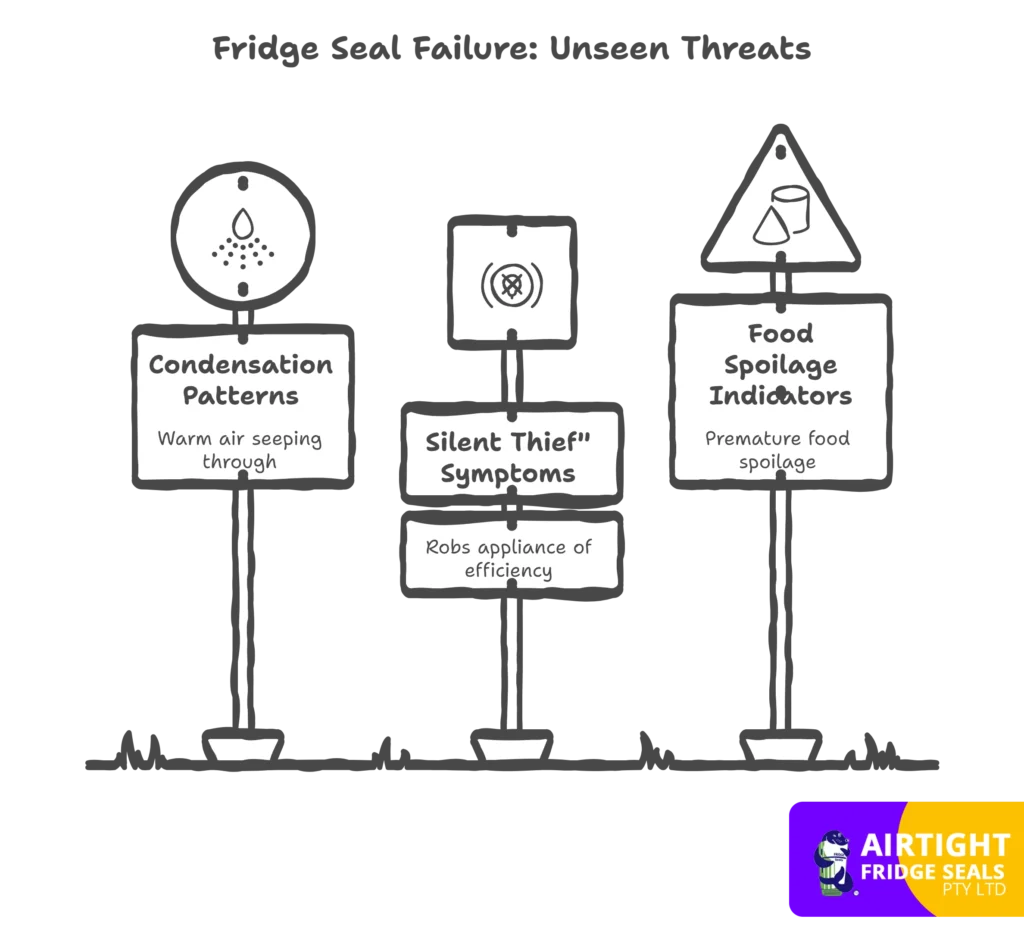
1. Mysterious Condensation Patterns
Condensation is one of the earliest and most reliable clues that your fridge gasket is no longer airtight. When warm, humid air enters the appliance, it reacts with the cool interior and forms water droplets in specific patterns that can reveal where the seal is leaking.
Vertical water streaks along the door edges indicate that warm air is seeping through, increasing humidity inside and forcing the compressor to work harder.
Fogging on glass shelves shortly after closing the door suggests a consistent flow of humid air into the fridge, typically due to a weakened or warped seal.
Dampness on front-positioned items (such as bottles or produce stored near the door) signals that the seal is not forming an airtight closure.
Australian Note:
In humid coastal regions like Queensland or Northern NSW, these condensation signs are more pronounced due to high ambient moisture levels. However, in drier areas such as South Australia or Western Outback zones, condensation may evaporate quickly — making the issue less visible but no less serious. In such cases, rely on temperature fluctuations or noise changes as additional clues.
2. The “Silent Thief” Symptoms
Some signs of a weak fridge seal are not visible at all but can be detected through subtle changes in your fridge’s performance. These are often referred to as the “silent thief” symptoms, as they quietly rob your appliance of efficiency and longevity.
Fridge light remains on after closing: If the interior light stays on, it means the door sensor isn’t triggering properly — often because the seal prevents the door from fully closing.
Warm spots in the dairy compartment: The softest point of the seal typically weakens first, allowing warm air to enter and affect temperature-sensitive items like milk, butter, and cheese.
Soft butter or melted cheese on upper shelves: Warm air naturally rises, so if the top of the door seal is failing, you’ll notice these items soften faster despite normal thermostat settings.
These subtle performance changes are strong indicators that your gasket is allowing air infiltration even if the damage isn’t visible.
3. Food Spoilage Indicators
The condition of your stored food often tells the story before the appliance does. A failing seal directly impacts humidity control, temperature stability, and airflow, all of which contribute to premature food spoilage.
Fresh herbs wilting faster than usual: Uncontrolled airflow and fluctuating humidity levels cause leafy vegetables and herbs to lose moisture rapidly.
Cheese or dairy moulding on the door side: This indicates external humidity entering through a weak seal, creating the ideal environment for bacterial growth.
Cloudy ice cubes or irregular freezing patterns: Air leaks allow warm air to mix with cold, causing partial melting and refreezing of ice — a telltale sign of poor sealing.
Even slight temperature changes caused by an air leak can reduce the lifespan of fresh produce and increase the risk of bacterial growth, especially in Australian summer conditions, where ambient temperatures can accelerate spoilage.
Testing and Inspecting Your Fridge Seal
Regular inspection of your fridge door seal is one of the simplest yet most effective ways to maintain energy efficiency and food safety. A faulty gasket often leads to temperature fluctuations, increased electricity usage, and faster food spoilage. Fortunately, there are several quick and reliable methods to test and inspect your fridge seal before minor issues turn into costly repairs.
1. The Flashlight Test
This classic and highly accurate method helps detect even the smallest leaks that may not be visible to the naked eye.
How to do it:
Place a bright flashlight or torch inside the refrigerator, pointing toward the door edges.
Turn off the room lights to create complete darkness.
Look carefully around the door frame from the outside.
What it means:
If you see light escaping through any part of the seal, it indicates a weak or damaged section where cold air is leaking.
Pro Tip:
Use chalk or masking tape to mark the leakage points before calling a technician or ordering a replacement seal. This helps ensure targeted and efficient repair or replacement.
2. The Paper Test (A4 Sheet Method)
The paper test is a quick and easy way to check how well your fridge seal grips the door frame.
How to do it:
Place a standard A4 sheet between the fridge door and the frame.
Close the door firmly and try to pull the paper out.
Repeat this process around the door — approximately every 5 centimetres.
What it means:
If the sheet slides out easily without resistance, that section of the gasket is not sealing properly. A strong seal should hold the paper tightly in place.
3. Air Leak Test
This method helps identify invisible air leaks that may not show up in visual tests.
How to do it:
With the fridge door closed, slowly run your hand around the edges.
Feel for cold drafts or slight temperature differences along the gasket.
What it means:
Any noticeable flow of cold air indicates a compromised seal. You can also use a smoke stick or incense to visually detect airflow escaping from the door edges.
4. Visual Inspection
Sometimes the issue is clearly visible. A simple visual check can quickly reveal physical damage or misalignment.
What to look for:
Cracks, splits, or tears along the gasket surface
Hardened or brittle sections that have lost flexibility
Loose corners or detachment from the frame
Uneven door alignment or rocking when closed
Even small gaps can lead to substantial energy loss and reduced cooling efficiency.
5. Regular Maintenance & Cleaning
Preventive maintenance is the key to extending the life of your fridge seal and ensuring consistent performance.
Best practices:
Wipe the gasket every few months with warm, soapy water to remove food residue, grease, and crumbs.
Avoid harsh chemical cleaners or abrasives that can cause the rubber to crack or harden.
Apply a small amount of petroleum jelly or silicone conditioner along the gasket edges to maintain flexibility.
Check for tight closure after deep cleaning or rearranging door shelves, as heavy items can misalign the seal.
Why it matters:
Routine inspection and cleaning can prevent air leaks, reduce power consumption, and prolong the lifespan of your refrigerator. Over time, this simple practice can lead to noticeable energy savings and consistently fresh food storage.
Climate-Specific Warning Signs of a Failing Fridge Seal in Australia
Australia’s diverse climate significantly impacts fridge seal performance. Factors such as humidity, heat, and air quality can accelerate gasket wear or cause unique problems depending on the region. Understanding these climate-specific warning signs helps homeowners and businesses identify issues early and maintain optimal fridge efficiency.

1. Tropical North (Queensland, Northern Territory, Northern WA)
High humidity and warm temperatures in tropical regions place extra stress on fridge gaskets:
Seal becomes sticky or tacky: Constant moisture can degrade rubber, reducing flexibility and sealing ability.
Black mould spots: Warm, humid conditions create a perfect environment for mould growth along the gasket.
Frequent frost build-up: Excess moisture entering the freezer can lead to ice accumulation, forcing the fridge to work harder.
2. Arid Zones (Outback, Central Australia)
In dry, hot regions, the lack of humidity and extreme heat affects the rubber differently:
Brittle or cracked rubber: Dry heat causes the gasket to lose elasticity and eventually crack.
White mineral deposits: Hard water evaporation can leave mineral residues on seals, reducing their effectiveness.
Door alignment shifts: Extreme temperature swings may warp the fridge frame, causing uneven sealing.
3. Temperate Coastal Regions (NSW, VIC, Southern WA)
Coastal areas face specific challenges due to moisture, salt, and mild temperature variations:
Salt buildup on seals: Ocean air accelerates rubber corrosion, weakening the seal over time.
Rust around hinges and metal components: Moist, salty air affects metallic parts, indirectly compromising the door’s airtight closure.
4. Bushfire-Prone Areas
Smoke, ash, and airborne particles from bushfires can degrade rubber faster than normal. In such areas:
5. Modern Apartments and High-Rise Buildings
Newer apartment designs often include fridges with thinner, more precise seals:
Generic replacement gaskets may not fit properly, reducing sealing efficiency.
Always verify compatibility with the specific fridge model before ordering a replacement
Repairing vs Replacing a Fridge Seal
Maintaining an effective fridge seal is essential for energy efficiency, food preservation, and prolonging the life of your appliance. Depending on the severity of the issue, a seal may be repaired or require full replacement. Understanding when to take each approach ensures optimal performance and prevents unnecessary energy waste.

When to Repair a Fridge Seal
Minor gasket problems can often be addressed at home without professional intervention:
Cleaning the seal: Remove grease, crumbs, or debris with warm, soapy water to restore proper adhesion.
Reheating slightly deformed areas: Use a hair dryer on low heat to gently soften and reshape warped sections of the rubber.
Reattaching loose edges: If a corner or strip has come away from the frame, carefully reposition it to achieve a tight closure.
These simple fixes can extend the life of the seal and restore airtight performance temporarily.
When Replacement Is Necessary
Some issues indicate that repair is no longer sufficient and the gasket must be replaced:
Cracks, stiffness, or hardened material that prevent proper sealing.
Permanent “memory folds” where the rubber does not spring back into shape.
Visible light leakage or consistent condensation around the door.
Sudden energy bill increases of 15% or more, showing the fridge is working harder than normal.
Appliances older than seven years, where wear has naturally degraded the seal.
Replacing the gasket ensures a full airtight closure, reduces energy consumption, and protects stored food from spoilage.

Preventing Future Fridge Seal Problems
Proper maintenance and care can significantly prolong the life of your fridge seal:
1. Cleaning and Maintenance
Wipe down the gasket regularly with mild detergent and warm water.
Avoid abrasive chemicals that can dry out or crack the rubber.
Remove crumbs, grease, or sticky spills that could prevent the door from sealing properly.
2. Preventing Moisture and Physical Damage
Close the fridge door gently to avoid warping the seal.
Ensure the fridge is level to prevent uneven pressure on the gasket.
In humid conditions, regularly check for condensation and wipe it away promptly.
3. Choosing Genuine vs Aftermarket Seals
4. Energy-Efficient Seals
Modern seals are designed with improved insulation and flexibility, helping to reduce energy consumption and extend appliance life. Upgrading to these energy-saving seals can offer long-term savings on electricity bills while maintaining food freshness.
Temporary Fixes While Waiting for Replacement
If replacement parts are not immediately available, temporary solutions can help minimize damage and energy loss:
Apply draft-stopper tape along the weak sections of the seal (effective for 2–4 weeks).
Minimise door openings to reduce air leakage and compressor strain.
Rearrange contents to avoid heavy items pressing unevenly on the door.
Importance of Regular Inspection and Timely Replacement
Maintaining an effective fridge seal is essential for energy efficiency, food safety, and appliance longevity. Regular inspections allow you to detect problems early, preventing minor issues from escalating into costly repairs or significant food spoilage. Simple diagnostic checks, such as the paper test or flashlight test, performed every few months, can quickly reveal air leaks, cracks, or hardened sections of the gasket.
In Australia, where electricity costs are high and climate conditions vary widely — from humid coastal areas to dry inland zones — keeping a refrigerator seal in optimal condition is both a practical and economic necessity. A well-maintained seal reduces compressor strain, maintains consistent internal temperatures, and minimizes energy waste, translating directly into lower power bills and better food preservation.
Final Advice for Australian Households and Businesses
For households, a fully functional fridge seal means fewer spoiled groceries, reduced energy consumption, and lower electricity bills. For businesses, including cafés, restaurants, and supermarkets, maintaining a tight seal is crucial for food safety compliance, operational efficiency, and avoiding disruptions caused by refrigeration failure.
Partnering with a trusted local technician for regular inspections and timely replacements ensures that your fridge operates at peak efficiency year-round. In regions with high humidity, extreme heat, or bushfire-prone areas, professional maintenance is particularly important to address climate-specific challenges and protect the appliance.
Although a fridge seal may seem like a small component, its impact is substantial. Paying attention to its condition:
Extends the lifespan of the appliance
Maintains food freshness and safety
Reduces energy costs
Prevents costly repairs and downtime
A proactive approach to fridge seal maintenance today ensures reliable, efficient, and cost-effective refrigeration tomorrow.
Summary
A fridge seal may seem like a minor component, but it plays a critical role in maintaining energy efficiency, food safety, and appliance longevity. Failing seals can lead to air leaks, temperature fluctuations, frost build-up, higher electricity bills, and faster food spoilage. Detecting problems early through regular inspection, cleaning, and simple diagnostic tests such as the paper test or flashlight test can save money and prevent costly repairs.
For minor issues, DIY repairs like cleaning, reattaching loose edges, or gently reshaping warped sections can restore functionality. However, cracked, hardened, or misaligned seals require full replacement, preferably with either genuine or high-quality aftermarket seals. Climate-specific factors in Australia — from humid tropical coasts to dry inland regions — affect gasket wear and should be considered when maintaining or replacing seals.
Regular inspection, timely maintenance, and professional replacement when needed help extend fridge lifespan, reduce energy costs, and ensure food remains fresh and safe. For households and businesses alike, proactive care of fridge seals is a cost-effective and practical strategy.

Frequently Asked Questions (FAQ)
1. How do I know if my fridge seal needs replacing?
Warm air around the edges, frost build-up, higher electricity bills, or faster food spoilage are common signs. A simple paper test can confirm if the seal is still holding properly.
2. Can I repair a fridge seal myself?
Minor issues like dirt build-up or a loose corner can be fixed at home, but cracks, hardened rubber, or misalignment usually require full replacement.
3. How long should a fridge seal last?
On average, a fridge gasket lasts 3–5 years, depending on usage, climate, and care. Regular cleaning and gentle handling extend its lifespan.
4. Are aftermarket seals as good as genuine ones?
High-quality aftermarket seals perform well if properly sized and installed. Genuine seals guarantee a precise fit but may cost more.
5. How much does fridge seal replacement cost in Australia?
Costs vary by fridge brand, size, and location, typically ranging from AUD $80 to $150 for parts and labour. Mobile technicians often provide full quotes upfront.
6. Can a bad fridge seal increase my electricity bill?
Yes. Leaks force the compressor to work harder, consuming more power and shortening appliance lifespan. Replacing a faulty gasket often offsets its cost through energy savings.
7. Do I need a professional for fridge seal replacement?
Professional installation ensures a correct fit and airtight closure, which is especially recommended for commercial fridges or complex models.
8. How often should I check my fridge seal?
Inspect every few months for cracks, hardened areas, or gaps where the door doesn’t close flush. Early detection prevents energy loss and food spoilage.
9. Can a damaged fridge seal cause food contamination?
While the seal itself doesn’t contaminate food, temperature fluctuations from leaks can promote bacterial growth, making stored food unsafe.
10. What brands of fridge seals are available in Australia?
Most major brands, including Fisher & Paykel, Westinghouse, Samsung, and LG, have compatible seals available through local suppliers.
11. Does humidity affect fridge seals?
Yes. High humidity can soften or warp seals over time, especially in coastal or tropical regions. Regular inspections are crucial in these climates.
12. Can I use petroleum jelly on a fridge seal?
A thin layer may keep the gasket flexible, but always follow the manufacturer’s instructions before applying any product.
13. How long does a fridge seal replacement take?
Most professional replacements take less than an hour, including removal, fitting, and testing to ensure a tight seal.


2 Comments
Awesome article
Thanks Matt for your Feedback. we are happy to supply high quality fridge seals.